










tutorbin

corporate accounting homework help

Boost your journey with 24/7 access to skilled experts, offering unmatched corporate accounting homework help

tutorbin

Trusted by 1.1 M+ Happy Students

WhatsApp Support

Get Instant
Online Homework Help
via WhatsApp

Get instant homework help from top tutors—just a WhatsApp message away. 24/7 hw help support for all your academic needs!

A
S
M
R
★★★★★
2M+ students trust TutorBin
Your WhatsApp Number
phone
or
⚡ Instant reply
🔒 100% private
👨‍🏫 Top tutors
🌍 All subjects
*Get instant homework help from top tutors—just a WhatsApp message away. 24/7 support for all your academic needs!
2M+ Students Helped24/7 Live SupportExpert TutorsAll Subjects CoveredInstant Response100% ConfidentialTop Rated ServiceMoney-back Guarantee2M+ Students Helped24/7 Live SupportExpert TutorsAll Subjects CoveredInstant Response100% ConfidentialTop Rated ServiceMoney-back Guarantee

Recently Asked corporate accounting Questions

Expert help when you need it
  • Q1:Question Balance the Accounting Equation Determine the effects of Transactions on the Accounting Equation. Instructions: Use the above format. Find all the required data in reference section. Submit solution in Excel. Handwritten solution will not be accepted.See Answer
  • Q2: Mini research proposal This assessment is the first assignment for the module BE951. This piece of coursework is worth 20% of the overall assessment of BE951. The requirements for coursework are as follows: Using a topic that interests you, develop a research question. Your answer should briefly review the relevant literature in the field, explain how your research question fits into that literature, and explain the need for, and importance of, your proposed research. • Essays should not exceed 700 words in length. • • • The best example of a mini-research proposal is the introduction section of a good research article. Also, a sample mini-research proposal is uploaded onto the Moodle page. Your essay should include a title page and a bibliography, which includes the full reference for all articles, books and other sources you have cited in the body of the text. The bibliography (and any footnotes) need not be included in the word count. The essay does not need to be structured in any particular format. Nevertheless, the proposal may have some paragraphs developing the research question or questions. You may have a few sentences on methods after the research questions. Generally, it should look like the introduction section of an article. Also, have a look at the sample proposal uploaded on Moodle. The essay must be word-processed, and double-spaced using a standard font (such as Times New Roman or Arial) in 12 point. Note that your coursework is to be submitted ONLY via submission deadline. b). Check for the A. Proposed List of Research Topics: The proposed list of research topics is just indicative and aims to give you an idea of potential research questions. However, the topics you can cover are not limited to this list, but need to be closely related to the accounting literature. 1. Accounting Information: • narrative reporting reporting and voluntary disclosure • • accounting systems and micro-finance in rural/indigenous communities role in markets 2. Accounting profession: role in taxation, fraud, corruption • image creation and management of • ethical issues in accounting profession gender and equality issues in accounting profession 3. Audit and Auditors: . audit and Corporate Social Responsibility auditors' responsibility for fraud detection accounting and auditing standard setting 4. Business Ethics: . ethics and CSR Stakeholder theory and ethics whistleblowing and accounting ethics ethics of taxation and tax-avoidance ethics in stakeholder-company relations ethics and MNCs 5. Corporate Governance: Role of activist investors • • Role of non-executive directors • executive remuneration and CG 7. Foreign aid: . • micro-finance globalization and aid-agencies and public sector and management control 8. International Financial Reporting Standards: • development of standard setting effects of standards and standard setters 9. Islamic accounting, audit and corporate governance 10. Accounting and Information Technology 11. The Impact of Company Law on Accounting Issues 12. Management Accounting: performance measurement • accounting and management in arts and culture . • management information systems and the arts Enterprise Resource Planning Systems organisational change in voluntary sector organizations management accounting and control systems: adoption, design, implementation, and use 13. Public Sector: public sector accounting . reform and privatization . public sector in developing countries organisational change in the New Public Management and management accounting Performance Measurement Frameworks in the public or private sector 14. The Financial Crisis: • role of audit in corporate governance and financial reporting and 15. Market Based Accounting Event studies • mergers and acquisitions stock performance financial performance earnings announcements earnings management financial analystsSee Answer
  • Q3: Overview Accountants must know how to set up multiple years' worth of financial statements for review. They must also know how to do different types of analysis work like vertical, horizontal, and ratio analyses. Directions: There are two parts for this milestone: the relevant tabs of the Project Workbook Template and the Financial Analysis section in the Business Valuation Template. Project Workbook Template: Balance Sheet and Income Statement For the Project Workbook Template part of this milestone, you will complete the financial analysis for the company you selected by reviewing five years of historical financial statements beginning with the most recent year filed. You will focus on the balance sheets and income statements published by the company in their annual SEC 10-K filings. Remember, assets = total liabilities + owner's equity. The common-size statements and Milestone Ratio tab will auto-calculate. Use these sections to check your work for the Milestone Balance Sheet and Milestone Income Statement tabs. Enter the year on the balance sheet first to auto-populate the rest of the years correctly. Insert the name of the company and the dates of the period covered on every tab since these do not auto-populate. Insert how values are being reported in the heading, whether it be in thousands or millions. The template will provide a check digit for the Milestone Balance Sheet tab to help you make sure your balance sheet is in balance. Use the check digits to check your work prior to submission. Complete this portion of the milestone first before publishing your findings in the Business Valuation Template. Note: You may choose to complete an assignment using a desktop program instead of SNHU's virtual desktop (VDI); however, technical support will not be provided by SNHU if you select this option. Business Valuation Template: Financial Analysis For this milestone, you will complete only the Financial Analysis section of the template. Specifically, you must address the following rubric criteria: Project Workbook Template Prepare the company's balance sheet accurately and completely on the Milestone Balance Sheet tab in the workbook. Include the following details in your response: Ensure the total assets, total liabilities, and owner's equity agree with the company's published financial statements in the 10-K filings. Ensure the balance sheet is in balance for all five years. Ensure all 10-K financial statements are reporting in the same dollar amount (i.e., thousands or millions). Make adjustments in the workbook accordingly. Prepare the company's income statement accurately and completely on the Milestone Income Statement tab in the workbook. Include the following details in your response: Subtotal the income statement in your workbook only to the published income statement line items for net income before tax for all five years. Include the gross profit margin even if the company does not report a gross profit margin on the published income statement. Identify the direct cost of goods sold. The following sections are found in the Business Valuation Template: Balance Sheet Analysis . • • • • • • Explain the findings regarding the company's asset accounts for the previous five years. Include the following details in your response: Describe in detail the material changes in the asset accounts, including changes in cash, AR, inventory, property, plant and equipment, and goodwill. Explain what these changes might be related to. Explain the findings regarding the company's liability accounts for the previous five years. Include the following details in your response: Describe in detail the material changes in both current and long-term liabilities. Explain what these changes might be related to. Explain the findings regarding the company's equity accounts for the previous five years. Include the following details in your response: Describe in detail the changes to equity accounts, including common stock, treasury stock, or additional paid in capital (i.e., whether the company raised funds or retired stock). Explain how the changes compare to the net income or other sections of the balance sheet. Identify whether the company paying out dividends. Explain in detail how the company's dividend payouts have changed over the past five years. Describe in detail the changes in “total equity” (representing the current “book value” of the company). Explain what the company's current and prior year liquidity and debt-to-equity ratios say about the company's financial health. Consider the following questions to guide your response: What is an appropriate level of debt? How does this year's performance compare to the previous year? Income Statement and Cash Flow Analysis • Explain the profitability ratios that are included in the company's financial statements. Include the following detail in your response: • Explain any trends and relate any changes back to the balance sheet and income statement accounts used in the ratio calculation. Explain the profitability of the company for the prior and current years. Consider thefollowing questions to guide your response: What does a vertical analysis of the company's gross revenue show you? What is the percentage (%) of change year over year for these past five years? How are the company's COGS and gross profit margin being managed? How are the company's sales, general, and administrative expenses being managed as a percentage of sales? What does this tell you about the company's current business cycle? Remember that it is normal for this percentage to rise when sales are dropping and fall when sales are rising. If this is not happening, what might be the reason? Describe what free cash flow is and how it is calculated. • Explain the free cash flow history for the company. • • • • Explain the data reported in the cash flow statement for all five years reported. Include the following details in your response: Identify the amount of cash flow reported from operations. Identify the amount of cash flow reported from investments. Identify the amount of cash flow reported from financing. Explain the correlation between each of these categories of cash flow for the past five years. Normalization Adjustments Analysis Define the term normalization adjustment. Identify three examples of balance sheet normalization adjustments that might appear. • Identify three examples of income statement normalization adjustments that might appear. Summary Summarize your findings for the valuation team. Include the following details in your response: Explain what you learned as you researched the company. Identify the key points the valuation team needs to be aware of. Create at least one effective visualization that supports key points. Include the following detail in your response: Provide appropriate labels for the visualization(s). If you need writing support, access the Academic Support module of your course. What to Submit ➤ Project Workbook Template Submit the Project Workbook Template with the following tabs completed: Milestone Balance Sheet, Milestone Income Statement, Milestone Ratios. Note: You will be using this same file for this milestone and your project. Business Valuation Template Submit the Business Valuation Template with the Milestone Two: Financial Analysis section completed. The Financial Analysis section should be an additional 4- to 6-page Microsoft Word document with double spacing, 12-point Times New Roman font, and one-inch margins in addition to the current page count. Sources should be cited according to APA style./nSee Answer
  • Q4:Topic - Statement of Owners Equity in US Requirements As part of our project, we must include a Statement of Owners Equity section. This statement is a significant financial document that shows the changes in the equity of a company over a period of time. To create a report on the Statement of Owners Equity, please follow these instructions: Introduction: Begin with a brief introduction to the purpose of the Statement of Owners Equity and why it is essential for businesses and investors. Key Components: Describe the key components of the Statement of Owners Equity, including beginning equity, net income, dividends, and ending equity. Explain how changes in these components affect the overall equity of the business and how the statement relates to other financial documents such as the Balance Sheet and Income Statement. Trends and Analysis: Analyze the Statement of Owners Equity trends over time by comparing the current period to previous periods. Identify any significant changes in equity and explain their potential impact on the business. Discuss any challenges or limitations in interpreting the statement. Conclusion: Summarize the key points discussed in the report and provide final thoughts on the importance of the Statement of Owners Equity for businesses and investors. When preparing your report, please ensure that you use accurate and up-to-date financial data for the company. You should also use clear and concise language and provide any relevant charts or graphs to support your analysis. Word Limit - 300 Words, APASee Answer
  • Q5: Instructions ACCT-221 10-K Project Instructions Overview As an analyst for a large U.S. multinational corporation, you are assigned to examine a possible acquisition candidate, completing an initial search and review. Your supervisor is a member of the Controller's team. The Controller reports directly to the Chief Financial Officer (CFO). Your work may be presented to various audiences, so professionalism is essential in all deliverables you create. As you review historical financial statements, you cannot conclude if this company is a good investment. Select a publicly traded company. The company must have Accounts Receivable and Inventory. You must select a retail or manufacturing company. By visiting and searching the SEC EDGAR system, you must research and secure the SEC 10-K Annual Report for the most recent year. Save the 10-K document to your computer for access. Please do not print this file, as the report is usually 100 pages or more. Use the selected company in the discussion postings throughout the semester. The discussion questions are designed to help you build your report and presentation content. Reading an SEC 10-K Report: The following link will access the SEC's document: How to Read an SEC 10-K Report. http://www.sec.gov/answers/reada10k.htm Course Learning Objective Assessed: Identify and communicate with accounting and financial information users to facilitate analytical decision-making. Report Requirements Report Content Post the name of your desired company in the Week 1 SEC 10-K Project discussion for your instructor's approval. Your post must answer all parts of the discussion. Each student must select a different company, so read the company names chosen by classmates. The company must be a publicly-traded company. Your report should comment on the financial statements for your company as they relate to the information presented through Week 5 material for this class, including the notes to the financial statements. Do not consider the material from Weeks 7 and 8 in your report. The report must be submitted after Week 5 material. Report Layout Write a minimum of a 3-page (a full-page typically has at least 300 words) report, single-spaced, one-inch margins, 12-point font, with a double space between paragraphs. This page requirement includes data visualization (charts and graphs) that you create, but the report should be primarily your written analysis. Page count does not include a title page, tables, exhibits, or reference list. Include a title page (include your name on the title page). The report must consist of headings such as Accounts Receivable and Inventory (topics from the textbook); other examples would be Income Statement, Balance Sheet, and the Statement of Shareholders' Equity. Include a brief introduction of your company and a conclusion/summary at the end. Most of your report should include accounting topics in weeks one through five. Your report must cover the Income Statement, Balance Sheet, Statement of Cash Flows, and Critical Audit Matters. You are to compare current and prior year statements and what changed. Do not cut and paste anything into the body of your report. You can copy the financial statements directly from the SEC 10-K Report into a report appendix but not the report's body. The statements are not included in the page count. APA style is required for citations and a reference list. The report must include the reference list. Resources Visit the Accounting Toolbox in the Course Content of the ACCT 221 LEO classroom. The Accounting Toolbox is a constant resource in our UMGC undergraduate accounting courses. This resource must include links and explanations to assist you with this report. Your professor will provide additional guidance. Academic Integrity You must comply with the UMGC Policy for Academic Integrity. Write your report using accounting terms from our textbook and explain how these terms relate to your company's financial statements. Thoroughly paraphrase in your own words and your writing style and structure. Changing a few words from the original is not fully paraphrasing. The discussion postings throughout the semester should assist you in completing this report. However, do not copy and paste your discussion responses into your report. PowerPoint Presentation You must prepare a PowerPoint draft and post it to Peer-Review of SEC 10-K Project discussion. Include data and an analysis of the data with your commentary. Tell the story as you learn from reading the financial statements. Do not copy the financial statements into your presentation. The slides should consist of your own analysis only. Including some key financial ratios, you calculate would be a good addition to your presentation (and your report). Do not use the notes feature. Once you have received feedback on your PowerPoint draft, make appropriate revisions, and submit the final version in the SEC-10K PowerPoint Presentation assignment folder. Requirements As part of our project, we must include a section on the Balance Sheet. This statement is a significant financial document that provides information on a company's assets, liabilities, and equity at a specific point in time. To create a report on the Balance Sheet, please follow these instructions: Introduction: Begin with a brief introduction to the purpose of the Balance Sheet and why it is important for businesses and investors. Key Components: Describe the key components of the Balance Sheet, including assets, liabilities, and equity. Explain how these components are categorized and what they represent regarding a company's financial position. Analysis: Analyze the Balance Sheet by examining the assets, liabilities, and equity trends over time. Identify any significant changes in the components and explain their potential impact on the business. Discuss any challenges or limitations in interpreting the statement. Conclusion: Summarize the key points discussed in the report and provide final thoughts on the importance of the Balance Sheet for businesses and investors. When preparing your report, please ensure that you use accurate and up-to-date financial data for the company. You should also use clear and concise language and provide relevant charts or graphs to support your analysis. 3pages Report Balance sheetSee Answer
  • Q6:Part 1 Yiru, Hein and Noor formed the Ho, LLC, a cash basis, calendar year entity reporting as a partnership for tax purposes at the beginning of 2023. The property contributed by each owner is described as follows: Yiru -40% Capital and Profits Interest: Land Hein -40% Capital and Profits Interest: Equipment Cash Noor-20% Capital and Profits Interest: Accounts Receivable Adjusted Basis $120,000 $-0- 125,000 Fair Market Value $150,000 $25,000 125,000 $-0- $75,000 The equipment is 5-year MACRS property acquired for $25,000 and placed in service in 2021. Show your work a. Determine the amount of gain or loss recognized to the owner's and the company, the inside bases, and each owner's outside basis immediately after this transaction./nb. How would the sale of the equipment for $22,000 on January 2, 2023, be handled-amount, character, and allocation? c. How would the sale of the real estate on January 2, 2023, for $145,000 be handled-amount, character, and allocation? d. How would depreciation be allocated to the owners under the traditional method and the traditional method with a curative effect? Note that the tax depreciation is zero (you may use any method and life to determine the depreciation on the books). Be thoughtful! Part 2 How are the assets in Part 1 reflected on the balance sheet of the partnership? How much are the partners' initial capital accounts? How will the capital accounts change subsequent to formation? Part 3 Assume that in Part 1, instead of contributing the land, Yiru sold the land to the partnership for $150,000. The partnership used some of its cash and borrowed the balance to make the purchase. How would this be reported? Can this really be treated as a sale? Part 4 Assume that the land in Part 1 was actually worth $200,000 and was subject to a $50,000 nonrecourse liability. How much is Yuri's basis in Ho, LLC? How much is Noor's basis?See Answer
  • Q7: 3/13/24, 12:53 PM Question 1 of 9 - Chapter 3 Assignment - Professor Fakoor Chapter 3 Assignment - Professor Fakoor Question 1 of 9 < > View Policies -/3 Current Attempt in Progress A review of the ledger of Swifty Corporation at December 31, 2020, produces the following data pertaining to the preparation of annual adjusting entries. 1. Prepaid Insurance $10,632. The company has separate insurance policies on its buildings and its motor vehicles. Policy B4564 on the building was purchased on April 1, 2019, for $7,776. The policy has a term of 3 years. Policy A2958 on the vehicles was purchased on January 1, 2020, for $4,800. This policy has a term of 2 years. 2. Unearned Rent Revenue $347,400. The company began subleasing office space in its new building on November 1. At December 31, the company had the following rental contracts that are paid in full for the entire term of the lease. Date Term (in months) Monthly Rent Number of Leases Nov. 1 9 $5,400 4 Dec. 1 6 $8,500 3 3. Notes Payable $124,000. This balance consists of a note for 9 months at an annual interest rate of 9%, dated November 1. 4. Salaries and Wages Payable $0. There are 8 salaried employees. Salaries are paid every Friday for the current week. 4 employees receive a salary of $800 each per week, and 4 employees earn $600 each per week. Assume December 31 is a Tuesday. Employees do not work weekends. All employees worked the last 2 days of December. Prepare the adjusting entries at December 31, 2020. (Credit account titles are automulicully adented when the amount is entered. Do not indent manually.) https://education.wiley.com/was/ui/v2/assessment-player/index.html?launchId=b9b5135a-259f-4486-a306-3864687fda84#/question/0 12 1/2 3/13/24, 12:53 PM Question 1 of 9 - Chapter 3 Assignment - Professor Fakoor Chapter 3 Assignment - Professor Fakoor Question 1 of 9 Dec. 2. 31 Dec. 3. 31 4. 31 ៥៩ Dec. eTextbook and Media Save for Later Last saved 22 hours ago. - / 3 Attempts: 0 of 3 used Submit Answer https://education.wiley.com/was/ui/v2/assessment-player/index.html?launchld=b9b5135a-259f-4486-a306-3864687fda84#/question/0 2/2See Answer
  • Q8: Learning Objectives: Class Project Financial Analysis and Data Analytics Assignment 1. Understand key financial ratios and calculations in analyzing a company's financial data. 2. Compare financial ratios across industries and calculate industry averages. 3. Compare one company's financial ratio to industry benchmark averages. Using Excel data analytics tools, create calculations, summarizations of data, and visualizations. Datasets and Deliverables: Your team must upload your files into the Submissions Folder in D2L. For the data analytics part, you are expected to use formulas and Excel functions to analyze the data, and guidance is provided on each part of the assignment. You must upload your Excel file so that I can check the formulas used in the analysis. You only need one team member to submit the files. If you do not respond promptly to your team member's communication, especially to start the project, you will be removed from your team and have to perform the project on an individual basis. If your team member does not respond within a timely manner, you can email your professor and you will be reassigned to another team to work in a productive team environment. Each Team must submit the following files to your submission folder: For Part One: 1. Summary Table (in Word format) For Part Two: 1. One-Page Summary of Findings (in Word format) 2. Supporting Excel File including separate worksheets (in Excel format) 1 Part One: Financial Ratio Summary (20% of your Project Grade) Review and think through each of the following twelve financial ratios (formulas provided in Appendix 1). Create a summary that provides the benefit of analyzing each ratio and whether a higher or lower ratio amount is better for a company's financial position. The first item is shown as an example. Complete the information for the other ratios. No. Ratio 1 Current Ratio 2 Debt to Equity Ratio Accounts Receivable 3 Turnover 4 Inventory Turnover 5 Asset Turnover Fixed Asset 6 Turnover Profit Margin on 7 Sales Gross Profit 8 Percentage 9 Return on Assets Basic Earnings per 10 Share 11 Diluted Earnings per Share Quality of earnings 12 Ratio Summary Table Explanation – the benefit for analyzing Provides information about a company's ability to pay short-term liabilities. 2 Which is better - a higher or lower ratio? Higher Part Two: Use the "ACC 306 Class Project Data” file to answer the following questions. (80% of your Project Grade) In the assignment, you will use the Excel file called “ACC 306 Class Project Data”. This Excel assignment will utilize your data analytic skills. Please focus your analysis on the most recent year. The Excel file consists of several worksheets: • • • Balance Sheet: 2023 and 2022 Balance Sheet Information for Clorso Income Statement: 2023 and 2022 Income Statement Information for Clorson Code: this file includes a group of companies along with their specific names, ticker symbols and industry classifcation. It serves as a reference for analyzing and understanding company data within a specific industry. Data: this dataset consists of a group of companies along with selected financial information. The first column contains the ticker symbols (TIC) representing each company. The following five columns provide the prior year data, specifically the figures ending on December 31, 2022. The remaining columns in the dataset contain the current year data, specifically the figures ending on December 31, 2023. Formula: this file includes financial ratio formula information. The objective of this project is to engage you in the analysis of a dataset in order to evaluate the financial performance of Clorsol, a manufacturing company. You will be required to compare the financial ratios of Clorsol with the industry averages for the manufacturing sector and provide an assessment of whether Clorsol performs better or worse. To fulfill this objective, you will need to conduct a thorough analysis of various financial ratios such as liquidity ratios, profitability ratios, and solvency ratios. By scrutinizing Clorsol's ratios in comparison to the industry averages, you will be able to ascertain the company's strengths and weaknesses, ultimately determining whether it outperforms or underperforms its industry peers. You are requird to submit a word file and an excel file to the submission folder I. Word File As part of this project, students are required to provide a one-page summary of findings based on your analysis. The summary should 1) provide a clear evaluation of how its financial ratios compare to the manufacturing industry averages 2) highlight the areas where Clorsol excels 3) identify weakness and potential areas for improvement. Students should ensure that their summary accurately reflects the findings and presents a coherent and logical narrative of the analysis conducted. Your summary should include relevant data presented through tables, charts, or graphs to address the data analysis questions provided below. Ensure that you incorporate these visual aids from your Excel analysis to support your discussion of Clorsol's performance in relation to the industry average. Both the content accuracy and professionalism of your summary and 3 supporting data will be evaluated during the grading process. Each team is only required to submit one set of solutions. II. Excel File 1) Caclulate eight ratios below for Clorsol using balalnce sheet and income statement information. Liquidity & Financial Leverage Ratios: Current Ratio = Current Assets / Current Liabilities Debt to Equity Ratio = total liabilities / total shareholder equity Activity Ratios: Accounts Receivable Turnover = Net Sales / Average net Accounts Receivable Inventory Turnover = Cost of Goods Sold / Average Inventory Asset Turnover = Net Sales / Average Total Assets Profitability/Earnings Ratios: Profit Margin on Sales = Net Income / Net Sales Return on Assets = Net Income / Average Total Assets Retrun on Equity = (net income – preferred dividends) / Average common stockholders' equity. a. Use excel formulas to calculate the ratios b. Insert a new worksheet, and label it as “Ratio". Include the ratio calculations in this sheet. 2) Calculate ratios for all companies and generate a merged file a. Compute the financial ratios for each company using the provided data in the "Data" file. (Note: you may add additional columns to the right side of the worksheet. Label each column with the appropriate ratios. To efficiently calculate the ratios for all companies, utilize the drag and fill feature available in Excel.) b. Once the ratios have been calculated for each company, you need to link each company with its associated industry information. Once you establish a clear link between each company (identified as TIC symbol) and its respective industry, make sure the "Data" file contains TIC, the industry, and the ratios for each company. i. In the "Data" file, add a new column adjacent to the "TIC" column and name it "Industry Category." Populate this column with the industry category information found in the 4th column (Column D) of the "Code" sheet. ii. Use VLOOPUP function to merge the industry information from the "Code" worksheet with the company names in the "Data" worksheet. You must use the VLOOKUP function in order to receive credit for this part of the assignment. It is not permissible to sort the data and merge it by copying and pasting. By correctly applying the 4 VLOOKUP function, you will be able to link the industry information from the "Code" worksheet with the respective company (TIC) in the "Data" worksheet, enabling the calculation of industry averages. 3) Create a pivot table to display the averages of the ratios by Industry. It is essential to use a pivot table to receive credit for this section of the assignment. a. Ensure that the pivot table displays the averages of the ratios for different industries, inlcudig the Manufacturing industry. b. Insert a new worksheet and label it as “Industry". Include the pitvot table in this sheet. 4) Utilize graphical representations to compare Clorsol's ratios with those of the manufacturing industry. a. Insert a new worksheet, and label it as "Graph." You need to copy the Clorsol' ratio and the average ratios for the manufacturing industry to this sheet. b. Utilize bar charts to visually represent the comparisons. You can either create single graph to encompass all ratios or generate multiple graphs, each focusing on one specific ratio. C. Ensure each ratio on the bar charts is clearly labeled to enable users to identify the specific ratio being represented. To summarize, your Excel file should, at the very least, incorporate the revised "Data" sheet, along with new sheets named "Ratio," "Industry," and "Graph." 5See Answer
  • Q9:1. When is the use of Activity-Based Costing most useful (find three reasons given in the case and repeat them). 2.Compute the ratio of overhead for each process (fabrication, assembly and packing and shipping) to direct labor dollars. Use Exhibit II totals (highlighted in blue). Notice that these totals include both manufacturing costs that are directly traceable to each process as well as the redistributed quality control costs that are reallocated (this has been done for you on Exhibit II). Answer the following questions: How many pools are there? How were the dollar amounts allocated to each pool (see second full paragraph on page 47)? How are the pool costs allocated to the product lines (bottom of page 47 and top of 48)? How is this different from what they were doing previously? Given the information in the case, what else do you think should be done (more cost pools?? different cost drivers??). To help you evaluate the number of pools, what % of the total overhead is in each pool? Do you see room for improvement? In terms of cost drivers, review the 3 processes on page 46. What do you think drives the costs in each process? Is it direct labor costs? 3. Compute the product costs and recreate the monthly budget based on budgeted quantity. 4. Recreate the 2-Factory Costing Model (ABC Costing 4-pools) from Exhibit V and update the question marks (order costs). The 2-Factory Costing model uses updated costs including the $70,000 in extra cost that was incurred during the 2008 year. 5. Compute BE quantities for each product line. Are both product lines breaking even? Compute the margin of safety in units and in dollars. 6. Compare the old to the new costs and profitability. What price changes could be made to maintain the same profit margin as previously budgeted? Calculate the change in volume necessary to generate the same contribution margin in total for each product line. Calculate the price elasticities. Are these changes in volume reasonable? Interpret the elasticities and relate to the case. 7. Assume that you know that the elasticities are -2.50 for RC1 and -0.50 for RC2. Use Goal Seek to determine the new projected volume (row 19) that should be budgeted given these elasticities. Go to DATA, WHAT IF ANALYSIS and select GOAL SEEK. Type in the following information as shown below (you need to run it twice). 8. Assume management decides to change the price for RC1 to $18.77 and for RC 2 to $26.04, and the total product costs are as given in tab 4, for the 4th pool. What is the optimal product mix (to maximize the total profit (in green)? Assume the following constraints: Max Volume for RC1 = 117,229 (quantity found on Goal Seek Tab) Max Volume for RC2 = 75,193 (quantity found on Goal Seek Tab) Min Volume for RC 1 = 90,000 units Min Volume for RC 2 = 30,000 units Total Max Volume = 190,000 unitsSee Answer
  • Q10: CASE STUDY ACCOUNTING 790 METADATA The data set for your analysis includes variables related to Global Bike's most recent sales data. You should be familiar with most of the variables, but here are some hints on this data set. ProdCat CatDescr OrderItem Division UnitOfMeasure Years Product category Product category description Line item in the sales order. First line is “10”, second is "20", and so on. "AS" = Accessories, "BI" = Bicycles "ST"=stücke in German translates to piece or each in English 2010 through 2022 PROBLEM STATEMENT Nina Kane and the global sales team at Global Bike are concerned about new competitors in the market. A strategic planning meeting is scheduled for the first of the month. Your job is to explore the data and provide insights on GB's current customer base and sales data. You need to complete the following analyses for the sales team. Be sure to include screen shots to support each of your answers and analyses. Submit your report as one Word document in Canvas. Title the file "your last name final case". For example, my document would be named "JonesN Case Study". Use full sentences and professional formatting. Visualizations are preferred over tables. Address your analysis to Nina Kane, President of Sales at Global Bike. Examine and clean and transform the data as needed. • Include your name in the title of all visualizations. Save all visualizations in your Story in SAC. Save your story in your 790 folder as LastNameFirstInitial Case Study. (My SAC file would be called "JonesN Case Study".) Create a visualization to answer each of the following questions for Nina and her team. While you may use more than one chart to answer the question, all of the variables need to be included in the charts. For example, charts for the first question would include revenues, regions, and product category. Write a brief interprestation of the visual analysis. Explain any filters, ranks, calculations, and/or aggregations. 1. Do sales revenues vary by region and product category? 2. Are some customers and divisions more profitable than others? (Use gross margin ratio.) 3. Are there any patterns of the number of orders by customer? Do the pattern(s) vary over time? As you are analyzing the data, pay attention to data that may be of importance to Nina and her team. Identify two (2) interesting and distinctly different relationships amongst three or more variables of the data set and discuss each briefly. You might hypothesize as to why the relationships are what they are. For example, "It makes sense that X is positively related to Y and Z because they are ...." Do NOT repeat any of the analyses from questions above or use the same variable for your two observations. 1. Create an appropriate visualization to illustrate the relationships you discovered. Use at least three (3) variables for each relationship. Do not use the same three variables for both of your visualizations. In some cases, I might recommend a tree map, Marimekko, and/or bubble chart to handle the larger quantity of variables. Alternatively, you might use trellising or some other means of handling multiple variables. Filter, sort and/or rank data if needed and explain what you filter if you do. You might even show the settings in a screen shot. Be sure to identify the aggregation of your measures for each chart, perhaps in the title. a. Explain to Nina why each of these visualizations is important to her team. Nina Kane, her US sales team, and her colleagues in Germany believe that Global Bike has four (4) groups of customers with distinct characteristics other than geography. She also knows that customers have changed over the past few years and so any analysis that you provide on the groups should be focused on the newest data available. Create a cluster analysis for Nina and her colleagues. What can you tell Nina about the 4 customer groups? (Use the following as a guide to answer this question.) 1. Define how you clustered the transactions for Nina. What measures and dimensions did you use? Did you use any filters? If so, what were they? 2. Is there a group that stands out? Why? Take a screenshot of the cluster analysis and explain why you chose that cluster and any characteristics that define that cluster. The sales team is also interested in sales trends overall. Create a forecast of sales for the next 36 months. 1. Is the forecast reliable? Why or why not? MORE HINTS You will need to be sure you have at least one date dimension. • Avoid using column or bar charts for every answer. GRADING PARAMETERS • Did you follow instructions? • Did you choose the right model(s) for the question asked? • • Did you get the correct answers to specific questions? Were you able to accurately explain the results of your model(s)? Do your explanations show an understanding of the data in the data set? Did you choose the best visualizations for the data represented? . Did you choose the correct variables aggregated at the appropriate level for the question at hand? Are your visualizations properly formatted, (i.e.; titles and legends), and easily read and interpreted? • Well organized and professionally written report. I will likely look at your files in SAC. Make sure that I have access. Do your visualizations in SAC match what you submitted in the write up? (You may have more visualizations in SAC than in your write up, but you must at least have the ones that you used to support your answers to this case study.)See Answer
  • Q11:W 回 CF_2[1] - Protected View Saved v ainul huda File Home Insert Draw Design Layout References Mailings Review View Help Question 2 of 2 259 words HUAWEI Mubin Distributor Statement of Financial Position as at 31st December 2018 and 2019 2019 RM 2019 RM 2018 RM 2018 RM Non-Current assets Equipment at cost 35,897 33,650 Less: Depreciation 16,960 18.937 14.196 19,454 Machinery 118,760 118,760 Less: Depreciation 71,256 47,504 59.830 59,380 66,441 78,834 Current assets Inventory 52,687 45,611 Receivable 78.490 65,442 Bank 371 131,177 111,424 197,618 190.258 Capital 137,841 128,069 I Add: Net Profit 45,838 58,222 183.679 186,291 Less: Drawings (49,000) (48,450) 134,679 137,841 Current Liabilities Payable Bank overdraft 39.943 42, 417 7,996 47,939 42,417 Non-current liability Loan 15,000 10,000 197,618 190,258 During the year 2019, he bought a new equipment at RM10,660 and he received RM5,200 cash from the sale of old equipment. Required: (b) Prepare cash flow statement that will show Mubin the movement of cash in his business. Focus + 22 P W X ^ M ENG US 2:49 PM 4/4/2024See Answer
  • Q12: Directions: Answer the following questions regarding the interview process. Be detailed in your responses. 1. Be Prepared a. What do you need to be prepared for an interview? 2. Dress Appropriately a. What is appropriate attire? Be very specific 3. Arrive 10-15 minutes early a. Why and what should you do with that time? 4. Greet Receptionist Appropriately a. Can he/she also be screening you? Why? 5. Greet Employer by Last Name a. When might it be appropriate to NOT greet the employer by their title and last name? 6. Handshake a. What does this tell the employer? 7. Good posture and Good eye contact throughout the interview. a. How should you sit b. With multiple interviewers, who should you address? 8. The Interview Itself a. Answering questions i. List two tips that you would give someone when answering interview questions. b. Asking questions i. List two good interview questions that a job candidate could ask a prospective employer. 9. THE CLOSING - ALWAYS - show INTEREST in the position a. How might you consider ending the interview if the interviewer says "is there anything else you'd like to add?" 10. Thank you letter a. When should you send a thank you letter? 11. Follow-up call a. How long after the interview should you make a follow-up phone call?See Answer
  • Q13: Instructions Overview Review the instructions for the SEC 10-K project. This week's report focuses on the Income Statement. Review the discussion board in week two on the Income Statement. Write a brief report of at least one page in whole paragraphs. You may use bullet points. This report will assist you in the final SEC 10-K project deliverables. Submit it as a Word document. Requirements We must include a section on the Income Statement as part of our project. This statement is a significant financial document that provides information on a company's revenues and expenses during a specific period of time. Link :- https://www.sec.gov/ix?doc=/Archives/edgar/data/27419/000002741923000015/tgt-20230128.htm Word Limit- 300 Words, APA Format:- To create a report on the Income Statement, please follow these instructions: Introduction: Begin with a brief introduction to the purpose of the Income Statement and why it is important for businesses and investors. Key Components: Describe the key components of the Income Statement, including revenues, cost of goods sold, gross profit, operating expenses, operating income, other income/expenses, and net income. Explain how changes in these components affect the overall profitability of the business. Trends and Analysis: Analyze the trends in the Income Statement over time by comparing the current period to previous periods. Identify any significant revenue, expense, or profitability changes and explain their potential impact on the business. Discuss any challenges or limitations in interpreting the statement. Conclusion: Summarize the key points discussed in the report and provide final thoughts on the importance of the Income Statement for businesses and investors. When preparing your report, please ensure that you use accurate and up-to-date financial data for the company. You should also use clear and concise language and provide relevant charts or graphs to support your analysis.See Answer
  • Q14:eBook Problem 6-03 The following are the monthly rates of return for Madison Cookies and for Sophie Electric during a six-month period. Madison Cookies Sophie Electric -0.02 Month 1 0.09 2 0.04 -0.03 -0.08 -0.13 0.10 0.14 -0.07 -0.02 6 0.04 Compute the following. Do not round intermediate calculations. Round your answers to four decimal places. a. Average monthly rate of return R, for each stock. Madison Cookies: Sophie Electric: b. Standard deviation of returns for each stock. Madison Cookies: Sophie Electric: c. Covariance between the rates of return. d. The correlation coefficient between the rates of return. 3 4 5 Chapter 06: Assignment - An Introduction to Portfolio Management The movning usus munung LTF PUUVIT SOUNC v uprine son veriyu dia munur penu Sophie Electric: b. Standard deviation of returns for each stock. Madison Cookies: Sophie Electric: c. Covariance between the rates of return. Month 1 -0.02 2 0.04 3 -0.08 4 0.10 5 -0.02 6 0.04 Compute the following. Do not round intermediate calculations. Round your answers to four decimal places. a. Average monthly rate of return R, for each stock. Madison Cookies: d. The correlation coefficient between the rates of return. 0.03 Madison Cookies Sophie Electric 0.09 -0.03 -0.13 0.14 -0.07 0.03 Would these two stocks be good choices for diversification? Why or why not? Madison Cookies and Sophie Electric are -Select- choices for diversification as these assets have -Select- Calect correlation./n CHAPTER 6 PROBLEM Only 3 chances to get the question correct, Here is first questions Chapter 06: Assignment - An Introduction to Portfolio Management Alempi 1. Problem 6-03 Problem 6-03 eBook Average/O The following are the monthly rates return for Madison Cookies and for Sophie Electric during a -month period. Madison Cookies Sophie Electric 1 -0.02 2 0.06 3 -0.09 4 0.13 5 -0.02 6 0.03 Compute the following. Do not round intermediate calculations. Round your answers to four decimal places. a. Average monthly rate of return R, for each stock. Madison Cookies: Sophie Electric: b. Standard deviation of returns for each stock. Madison Cookies: Sophie Electric: c. Covariance between the rates of return. d. The correlation coefficient between the rates of return. Would these two stocks be good choices for diversification? Why or why not? Month Chapter 06: Assignment - An Introduction to Portfolio Management THC TOROWing are the momenty races of recar for madison COORICS and for Supric ciccerie daring a six monun perioa. Sophie Electric: b. Standard deviation of returns for each stock. Madison Cookies: Sophie Electric: c. Covariance between the rates of return. d. The correlation coefficient between the rates of return. -0.02 0.06 -0.09 0.13 5 -0.02 6 0.03 Compute the following. Do not round intermediate calculations. Round your answers to four decimal places. a. Average monthly rate of return R; for each stock. Madison Cookies: Month good bad 0.06 -0.01 -0.08 0.16 -0.06 0.01 1 2 3 4 Madison Cookies Sophie Electric 0.06 -0.01 -0.08 0.16 -0.06 0.01 Would these two stocks be good choices for diversification? Why or why not? Madison Cookies and Sophie Electric are -Select- choices for diversification as these assets have -Select- -Select- ✓ correlation. Chapter 06: Assignment - An Introduction to Portfolio Management The Tonowing are the money rates of retam for madison COURICS and for Suphic Electric during a six monun penou. 1 -0.02 0.06 2 3 -0.09 4 0.13 -0.02 5 6 0.03 Compute the following. Do not round intermediate calculations. Round your answers to four decimal places. EA a. Average monthly rate of return R; for each stock. Madison Cookies: Sophie Electric: b. Standard deviation of returns for each stock. Madison Cookies: Sophie Electric: c. Covariance between the rates of return. Chapter 06: Assignment - An Introduction to Portfolio Management Attempts Average / 5 d. The correlation coefficient between the rates of return. 2. Problem 6-04 A. Problem 6-04 26 24 22 20 18 16 14 Would these two stocks be good choices for diversification? Why or why not? Madison Cookies and Sophie Electric are -Select- ✓ choices for diversification as these assets have -Select- -Select- high positive high negative low positive low negative Standard deviation of two portfolios if r1,2 = 0.50: Standard deviation of two portfolios if r1,2 = -0.65: Choose the correct risk-return graph. The correct graph is -Select- ✓ eBook Month Expected Return, % Madison Cookies Sophie Electric B You are considering two assets with the following characteristics. E(R₁) = 0.16 E(01) = 0.07 W₁ = 0.5 E(R₂) = 0.20 E(02) = 0.18 W₂ = 0.5 Compute the mean and standard deviation of two portfolios if r1,2 = 0.50 and -0.65, respectively. Do not round intermediate calculations. Round your answers for the mean of two portfolios to three decimal places and answers for standard deviations of two portfolios to five decimal places. Mean of two portfolios: 0.06 -0.01 -0.08 0.16 -0.06 0.01 ✓correlation. Chapter 06: Assignment - An Introduction to Portfolio Management three dcemmer places and answer TOT SLUTTour device or the purcromos co me common proces. Mean of two portfolios: Standard deviation of two portfolios if r1,2 = 0.50: Standard deviation of two portfolios if r1,2 = -0.65: Choose the correct risk-return graph. The correct graph is-Select- ✓ -Select- A. Expected Retur graph B graph A graph C graph D $26 22229 24 20 18 16 14 12 $10 8 6 4 2 N B. B A: 12 26 24 22 20 18 16 14 F12 10 8 =0.50 N A 10 12 14 16 18 Risk (Standard deviation),% Expected Return. % A: r B: r = 0.65 1.2 A: r 1.2=0.50 B 1.2=0.50 8 10 12 14 16 18 Risk (Standard deviation),% B: A 1.2= 10 12 14 16 18 (Standard deviation),% Risk B: r 1.2 0.65 == 0.65 C. 26 24 22 20 10 16 14 12 10 8 1 A: 1.2=0.50 Expected Return, % A: r A 1.2=0.50 B: B 1.2= 0.65 10 12 14 16 18 Risk (Standard deviation), B: r =- 0.65 1.2See Answer
  • Q15:Problem 3-8 Determining the Effects of Transactions on the Accounting Equation (textbook p. 73) Trans. Balance 2 Balance 3 Balance Balance 5 Balance 6 Balance 7 Balance Analyze: Cash in Bank + $10,000 Assets Office Grooming Accounts Receivable Equipment Equipment Liabilities Accounts Payable Owner's Equity Abe Schultz, Capital + $10,000See Answer
  • Q16:Problem 3-3 Determining the Effect of Transactions on the Accounting Equation (textbook p. 66) Cash in Trans. Bank Bal. 24,000 1 2 3 4 5 Bal. Accounts Receivable 700 Assets Computer Equipment 4,000 office Equipment 5,000 Liabilities Accounts Payable 3,000 Owner's Equity Jan Swift, Capital 30,700See Answer
  • Q17:Problem 3-2 Determining the Effects of Transactions on the Accounting Equation (textbook p. 62) Trans 1 2 3 4 5 6 Bal. Cash in Bank Accounts Receivable Assets Computer Equipment Office Furniture Liabilities Accounts Payable Owner's Equity Jan Swift, Capital Code ASee Answer
  • Q18: E 8-6 Various transactions related to debt and equity securities LO8-4 E 8-8 Various transactions relating to FVTPL investments LO8-3 E 8-9 Various investment securities. OLO8-2 LO8-3 LO8-4 Construction Forms Company buys securities for sale in the medium and long term when circumstances warrant, not to profit from short-term differences in price and not necessarily to hold debt securities to collect contractual cash flows to maturity. The company applies the irrevocable option permitted under IFRS 9 for equity securities. The following selected transactions relate to investment activities of Construction Forms whose financial year ends on December 31. No investments were held by Construction Forms at the beginning of the year. 2024 Mar. 2 Apr. 12 July 18 Oct. 15 Oct. 16 Nov. 1 Dec. 31 2025 Jan. 23 Mar. 1 Dec.17 Dec. 28 Dec. 31 Purchased 1 million Platinum Gauges ordinary shares for $31 million, including brokerage fees and commissions. 2025 Purchased $20 million of 10% bonds at face value from Zenith Wholesale Corporation. Jan. 5 Received cash dividends of $2 million on the investment in Platinum Gauges ordinary shares. Received semiannual interest of $1 million on the investment in Zenith bonds. Sold the Zenith bonds for $21 million. Required: 1. Prepare the appropriate journal entry for each transaction or event. 2. Show the amounts that would be reported in the company's 2024 income statement relative to these investments. Purchased 500,000 LTD International preference shares for $40 million. including brokerage fees and commissions. Rantzow-Lear Company buys and sells securities expecting to earn profits on short-term differences in price. The company's financial year ends on December 31. The following selected transactions relating Rantzow- Lear's trading account occurred during December 2024 and the first week of 2025. 2024 Recorded the necessary adjusting entry (or entries) relating to the investments. The market prices of the investments are $32 per share for Platinum Gauges and $74 per share for LTD International preference shares. Sold half the Platinum Gauges shares for $32 per share. Sold the LTD International preference shares for $76 per share. Purchased 100,000 Grocers' Supply Company preference shares for $350,000. Received cash dividends of $2,000 from the Grocers' Supply Company preference shares. Recorded any necessary adjusting entry relating to the Grocers Supply Company preference shares. The market price of the share was $4 per share. Sold the Grocers' Supply Company preference shares for $395,000. Required: 1. Prepare the appropriate journal entry for each transaction. 2. Indicate any amounts that Rantzow-Lear Company would report in its 2024 statement of financial position and income statement as a result of this investment. On December 31, 2024, Hull-Meyers Ltd had the following investments that were purchased during 2024, its first year of operations: FVTPL investments: Security A Security B Totals Security C Security D Totals Amortized cost securities: Security F Security E S Cost Required: Determine the following amounts on December 31, 2024. 1. Investments reported as noncurrent assets. 2. Investments reported as noncurrent assets. 3. Fair value gain (or loss) component of income before taxes. 4. Fair value gain (or loss) component of other comprehensive income in shareholders' equity. 900,000 105,000 Fair value through other comprehensive income securities: $1.005.000 900,000 $1,600,000 $ 490,000 Fair Value 615,000 $ $ 700,000 $ 780,000 $1,105,000 910,000 100,000 $1.010.000 915,000 $1.695.000 $ 500,000 610,000 Totals $1.110,000 No investments were sold during 2024. All securities except Security D and Security F are considered as maturing or to be sold within one year from December 31, 2024. No impairment loss events arose during the year. E 8-17 Fair value option; business model to hold to collect GLO8-1 ⒸLO8-2 LO8-3 E 8-27 Provision matrix for trade receivables ⒸLO8-7 E 9-1 Bank loan; accrued interest LO9-2 LO9-3 E 9-9 E 9-11 Warranties LO9-5 ⒸLO9-6 Current-noncurrent classification of debt LO9-1 LO9-4 LO9-5 LO9-6 E 9-16 Disclosures of liabilities Period OLO9-1 through Outstanding E 9-13 Contingent liabilities; product recall LO9-6 Provision rates December 31, 2024 December 31, 2025 30 days or less 0.04% $1,000,000 $1,600,000 (This is a variation of Exercise 8-1 focusing on the fair value option.) Tanner-UNF Company acquired as a long-term investment $240 million of 6% bonds, dated July 1, on July 1, 2024. Company management has the business model of holding to collect contractual cash flows, but when the bonds were acquired Tanner-UNF decided to elect the fair value option for accounting for its investment on grounds of "accounting mismatch." The market interest rate (yield) was 8% for bonds of similar risk and maturity. Tanner-UNF paid $200 million for the bonds. The company will receive interest semiannually on June 30 and December 31. As a result of changing market conditions, the fair value of the bonds December 31, 2024, was $210 million. Required: 1. Would this investment be classified on Tanner-UNF's statement of financial position 2. Prepare the journal entry to record Tanner-UNF's investment in the bonds on July 1, 2024. 3. Prepare the journal entries by Tanner-UNF to record interest on December 31, 2024, at the effective interest rate. 4. Prepare any journal entry necessary to recognize fair value changes as of December 31, 2024. 5. At what amount will Tanner-UNF report s investment in the December 31, 2024, statement of financial position? Why? sell the investmen 6. Suppose a bond rating agency downgraded the motivating Tanner-UNF The aging report of trade receivables of Prism Co is as follows. Prism estimates the provision rates based on past experience. 31- 60 days 0.60% $300.000 $670,000 rating of 61- 90 days. 1.35% Determine the loss allowance for Prism's trade receivables as at December 31, 2024, and December 31, 2025. Prepare the journal entry to record the impairment loss for 2024 and 2025. $80,000 $100,000 Required: 1. Prepare the journal entry for the issuance of the note by Quantum Technology. 2. Prepare the appropriate adjusting entry for the note by Quantum on December 31, 2026. 3. Prepare the journal entry for the payment of the note at maturity. amortized cost securities, FVTPL investments, FVOCI securities, significant-influence investments, or other? Explain. Required: How did Sprint report the debt in its statement of financial position? Why? 1. Commercial paper. -2. Noncommitted line of credit. Customer advances. Estimated warranty cost. Item 91- 180 days Sales $55,000 Required: 1. Should this loss be accrued, disclosed only, or neither? Explain. 2. What loss, if any, should Sound Audio report in its 2026 income statement? 3. What liability, if any, should Sound Audio report in its 2026 statement of financial position? 4. Prepare any journal entry needed. 5.00% $79,000 $5,000,000 Indicate (by letter) the most likely way each of the items listed below should reported in a statement On November 1, 2026, Quantum Technology, a geothermal energy supplier, borrowed $16 million cash to fund a geological survey. The loan was made by Nevada BancCorp under a noncommitted short-term line of credit arrangement. Quantum issued a nine-month, 12% promissory note. Interest was payable a t maturity. Quantum's financial period is the calendar year. An annual report of Sprint Corporation contained a rather lengthy narrative entitled "Review of Segmental Results of Operation." The narrative noted that short-term notes payable and commercial paper outstanding at the end of the year aggregated $756 million and that during the following year "This entire balance will be replaced by the issuance of long-term debt or will continue to be refinanced under existing long-term credit facilities." Required: 1. Does this situation represent a provision? Why or why not? How should Cupola account for it? 2. Prepare journal entries that summarize sales of the awnings (assume all credit sales) and any aspects of the warranty that should be recorded during 2026. 1. What amount should Cupola report as a liability at December 31, 2026? January 2, 20 8. Interest accrued on note, December 31, 2025. 9. Short-term bank loan to be rolled over into a two-year debt after the year-end. 10. A determinable gain that is contingent on a future event that appears likely to occur in three months. 181 days- 1 year Cupola Awning Company introduced a new line of commercial awnings in 2026 that carry a twoyear warranty against manufacturer's defects. Based on their experience with previous product introductions, warranty costs are expected to approximate 4% of sales. Sales and actual warranty expenditures for the first year of selling the product were: Actual Warranty Expenditures $37,500 -5. Accounts payable. 6. Long-term bonds that will be callable by the creditor in the upcoming year unless an existing violation is not corrected (there is a possibility the violation will be corrected within the grace period). -7. Note due March 3, 2026 11. Unasserted assessment of back taxes that probably will be asserted, in which case there would probably be a loss in six months. 50% $20,000 $16,000 12. Unasserted assessment of back taxes with a possibility of being asserted, in which case there would probably be a loss in 13 months. -13. A determinable loss from a past event that is contingent on a future event that appears extremely likely to occur in three months. 14. Bond sinking fund. 15. Long-term bonds callable by the creditor in the upcoming year that are not expected to be called. Sound Audio manufactures and sells audio equipment for automobiles. Engineers notified management in December 2026 of a circuit flaw in an amplifier that poses a potential fire hazard. An intense investigation indicated that a product recall is virtually certain, estimated to cost the company $2 million. The financial year ends on December 31. $190 illion. Prepare the journal entry f financial position at December 31, 2025. >1 year N. Not reported C. Current liability L. Long-term liability D. Disclosure note only A. Asset 100% $6,000 $7,600 sale. Reporting Method Page 666See Answer
  • Q19:3. The following information is available for Heller Company Beginning inventory Cost of goods sold Ending inventory Sales revenue Instructions Compute each of the following Inventory turnover. Days in inventory (a) (b) SHOW YOUR WORK (a) Inventory tumover (b) Days in inventory Inventory Method 365 Average Cost FIFO = EXTRA CREDIT: (5 PTS) Your former college roommate is opening a new retail store and asks you "Which inventory costing method should I use?" LIFO What is your response? Include a comparison of the tax effect, balance sheet effect, and income statement effect for AVERAGE COST, FIFO and LIFO $ 60,000 640,000 100,000 1,000,000 days Tax Effect Income Statement Effect Balance Sheet EffectSee Answer
  • Q20:2. Nolen Company is preparing the annual financial statements dated December 31, 2022 Information about inventory stocked for regular sale follows: Item B с D Quantity on Hand Item A B C 50 100 20 40 Unit Cost When Acquired Units 50 100 20 40 $20 45 59 40 Net Realizable Value at Year End Instructions Compute the valuation for the December 31, 2022, inventory using the lower-of-cost-or-net realizable value basis SHOW YOUR WORK $19 45 Lower-of-Cost-or Net-Realizable-Value 62 36 ExtensionSee Answer

TutorBin Testimonials

I found TutorBin Corporate Accounting homework help when I was struggling with complex concepts. Experts provided step-wise explanations and examples to help me understand concepts clearly.

Rick Jordon

5

TutorBin experts resolve your doubts without making you wait for long. Their experts are responsive & available 24/7 whenever you need Corporate Accounting subject guidance.

Andrea Jacobs

5

I trust TutorBin for assisting me in completing Corporate Accounting assignments with quality and 100% accuracy. Experts are polite, listen to my problems, and have extensive experience in their domain.

Lilian King

5

I got my Corporate Accounting homework done on time. My assignment is proofread and edited by professionals. Got zero plagiarism as experts developed my assignment from scratch. Feel relieved and super excited.

Joey Dip

5

TutorBin helping students around the globe

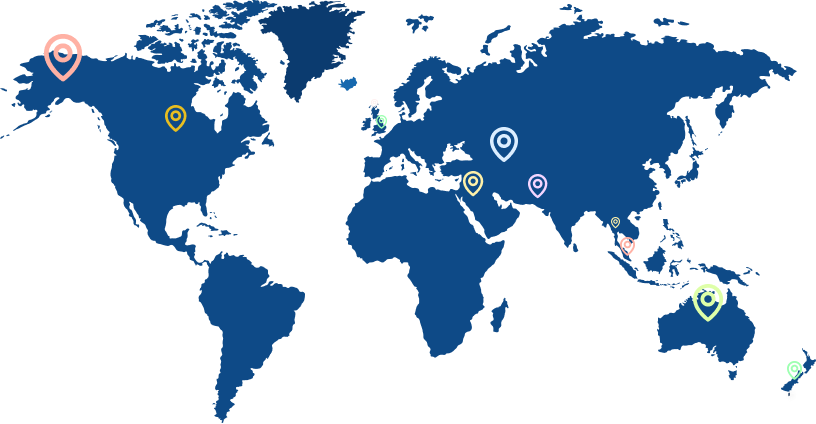
TutorBin believes that distance should never be a barrier to learning. Over 500000+ orders and 100000+ happy customers explain TutorBin has become the name that keeps learning fun in the UK, USA, Canada, Australia, Singapore, and UAE.