https://publicpagestutorbin.blob.core.windows.net/%24web/%24web/assets/mechanical_1_dfffe357dd.png

Gas Dynamics Homework Help - TutorBin

Submitting quality work on time does not get any easier than this. Choose TutorBin and avail top rated homework help today to maintain a high GPA.

https://publicpagestutorbin.blob.core.windows.net/%24web/%24web/assets/mechanical_2_1000aeb8b7.png

Trusted by 1.1 M+ Happy Students

WhatsApp Support

Get Instant
Online Homework Help
via WhatsApp

Get instant homework help from top tutors—just a WhatsApp message away. 24/7 hw help support for all your academic needs!

A
S
M
R
★★★★★
2M+ students trust TutorBin
Your WhatsApp Number
phone
or
⚡ Instant reply
🔒 100% private
👨‍🏫 Top tutors
🌍 All subjects
*Get instant homework help from top tutors—just a WhatsApp message away. 24/7 support for all your academic needs!
2M+ Students Helped24/7 Live SupportExpert TutorsAll Subjects CoveredInstant Response100% ConfidentialTop Rated ServiceMoney-back Guarantee2M+ Students Helped24/7 Live SupportExpert TutorsAll Subjects CoveredInstant Response100% ConfidentialTop Rated ServiceMoney-back Guarantee

Gas Dynamics Homework Help Will Solve All Your Academic Problems!

Gas dynamics is one of the subfields of fluid dynamics. This topic frequently focuses on the behavior of gases moving at speeds close to the speed of sound. In this branch, the principles of fluid mechanics and thermodynamics merge. It becomes incredibly complicated for students to understand this subject as it is based on intricate concepts and requires sound knowledge of mathematics. Thus they search for experienced gas dynamics tutors.


Common searches include "Can someone do my gas dynamics homework?" and "Can someone answer my gas dynamics homework solutions?" Your hunt, however, is ended right now. Yes, the best gas dynamics homework help is available at TutorBin from the best tutors. By reading this content piece, you can learn more about how TutorBin helps millions of students complete gas dynamics homework satisfactorily.

TutorBin: No.1 Online Gas Dynamics Homework Help in the USA


TopicsBenefits
Flow of compressible fluidsTop-notch quality by eminent tutors
Normal and oblique shock wavesOriginal work
Rayleigh lineOn-time delivery
Small perturbation theory for linearized flows 100% accuracy
Ordinary joltFree revisions
Mach wavePocket-friendly prices

Topics Our Gas Dynamics Tutors Cover In Homework Help!


It’s the right time to dig deeper into the topics our gas dynamics tutors cover while offering homework help to you. It will give you insights into what you can expect from them.

  • Our tutors are well-versed in the flow of compressible fluids.
  • They assist in one-dimensional flows, including basic concepts, isentropic flow, normal and oblique shock waves, Rayleigh line, Fanno line, and simple waves.
  • Our tutors cover multidimensional flows. It includes general concepts, small perturbation theory for linearized flows, and method of characteristics for nonlinear flows.

How Does TutorBin Solve Students’ Problems With Gas Dynamics Help?


TutorBin offers specialized gas dynamics homework help for students. Let's see how TutorBin helps students.

Problem 1: Insufficient knowledge of gas dynamics

Solution From TutorBin: Lack of conceptual clarity is the core factor that makes gas dynamics difficult for students. But, the students who choose TutorBin for gas dynamics homework help receive personalized support from proficient subject experts. We have expert tutors who provide well-explained solutions to students and ensure they easily understand them. Our tutors deepen the subject understanding of the students and correctly respond to their homework queries.

Problem 2: Limited time for studying and completing demanding coursework

Solution From TutorBin: The second issue that most students face is the short time they have to finish the extensive college curriculum. TutorBin identifies this problem statement and helps students study effectively. It eases the anxiety students face and they spend more time learning.It makes students more inclined to academics. With the help of this method, TutorBin helped students improve their performances and succeed academically.

Problem 3: Challenging to submit accurate and original gas dynamics homework

Solution From TutorBin: The pressure to provide accurate and original gas dynamics solutions is the third issue for students after the first two. TutorBin provides unique answers because it is familiar with the penalties caused by submitting copied work.

Problem 4: Improving grades

Solution From TutorBin: The final crucial element is the motivation to improve grades. Some students believe that their time studying in class is insufficient to help them get excellent marks. Experts at TutorBin provide 1:1 instructions to students, helping them to learn more and perform better in college and university.

Benefits Of Hiring TutorBin For Gas Dynamics Homework Solutions!


TutorBin's gas dynamics homework help online can be helpful for students studying gas dynamics. See why our gas dynamics support for students is popular among college students.

  • Quality homework: We offer students excellent gas dynamics tutoring thanks to our gas dynamics tutor's in-depth knowledge and industry experience. After working with our gas dynamics tutor online, we saw students' grades improve.
  • Timely Delivery: Once you have asked TutorBin for gas dynamics help, you don't have to worry about missing another deadline. We take great satisfaction in offering prompt gas dynamics service and never making you miss a due date.
  • Accurate Solutions: Calculations and arriving at the correct answer are crucial while solving gas dynamics questions. Our specialists will help you consistently find the correct answer to your gas dynamics homework with their in-depth knowledge of the subject.
  • Free Revision: What if you do not get the quality you expected? Relax! Our gas dynamics expert tweaks your content for free.
  • Ability to talk to your instructor: At TutorBin, we do more than complete your gas dynamics homework. Our gas dynamics homework experts are accessible round-the-clock to answer your questions. They can go over any parts of your work that are giving you trouble.
  • Critical hour assistance: Imagine a situation where you need gas dynamics homework solutions in the middle of the night. Whom will you contact in such a situation? The answer is TutorBin. Many students turn to our company for assistance when they have no one else to count on. Our highly skilled gas dynamics tutor will offer solutions 24/7.
  • Original material with a thorough justification: You can rest assured that you will get gas dynamics answers with original work. Gas dynamics homework solutions will be thoroughly examined and properly cited. Besides, you may be sure that the gas dynamics answers you purchase from us will make it simpler for you to comprehend all the underlying concepts.
  • Price ranges are fair: Our main goal is to assist students. And we make an effort to offer affordable homework assistance to meet the needs of all students. As long as TutorBin is in charge of giving you coaching in gas dynamics, you won't feel under any financial pressure.

Who Can Fulfill Your “Do My Gas Dynamics Homework” Request - The Answer Is TutorBin!


When completing your gas dynamics homework, do you frequently make mistakes? Are you concerned that you could fail to finish your gas dynamics homework solutions before the due date? Put an end to your concerns because TutorBin now offers excellent and superior gas dynamics homework assistance. Our services guarantee that you consistently submit high-quality homework on time. To help you confidently approach any problem, TutorBin provides new, enhanced, and more straightforward strategies. We carefully analyze our gas dynamics tutors' educational background, work experience, and general skill level before choosing them.

Our gas dynamics instructor researches your homework topic thoroughly. It enables the creation of creative, thorough, and one-of-a-kind homework solutions. We assist with gas dynamics homework at all levels, and in the format you require. We promise that you will always get our round-the-clock assistance. The fact that we provide superior gas dynamics homework assistance at a reasonable price is critical to who we are. Why then are you waiting? Ask us, "Do my gas dynamics homework," and get prompt assistance from us. With our service, you can deal with gas dynamics problems without difficulty or worry. Join our satisfied customers and simplify your life right away.

FAQs Searched By Students!

Does TutorBin provide gas dynamics tutoring for free?


We have specialists in gas dynamics that are well trained and skilled. Therefore, we charge for the tuition in gas dynamics. Due to the fact that we pay them for their time and effort, we do not offer free gas dynamics homework assistance. You may relax, though, knowing that the price is fair.

How much does TutorBin charge for gas dynamics homework help?


Our fees for gas dynamics homework help depend on several factors. The tutor's expertise, the task's length, the question's difficulty, and proximity to the deadline determine our fees for gas dynamics help for students.

Where can I get the gas dynamics homework solutions?


If you need gas dynamics homework solutions, don't hesitate to contact homework help services for assistance. But before you hire someone to help you with gas dynamics homework, think about the following aspects:

  • Eminent tutors with experience
  • Affordable prices
  • A short turnaround time
  • Quality assurance

It makes us proud to inform you that TutorBin possesses all these features to help you obtain precise gas dynamics solutions.

Can I get Original work help with gas dynamics homework?


Our tutors make the following efforts to ensure original work while offering help with gas dynamics homework:

  • Cite your sources correctly.
  • Make effective use of quotations and paraphrases.
  • Proofread and edit the paper.

How do I get homework help from gas dynamics tutors at TutorBin?


If you're looking for help from gas dynamics tutors at TutorBin, you can take the following steps:

  • Firstly, TutorBin is a good place for reliable gas dynamics homework help.
  • Please specify whether you require gas dynamics homework help, video solutions, or live teaching.
  • Create an account for free and post your question: "Can you do my gas dynamics homework?" You can contact us at 7082686818 or tutors@tutorbin.com for emergency help, even at odd hours.
  • Make payment and choose an experienced gas dynamics tutor.
  • You're ready to enlist the assistance of a gas dynamics expert.

Why should I pay TutorBin to do my gas dynamics homework solutions?


TutorBin includes several features that make it an excellent website for gas dynamics homework solutions.

  • Get 100 percent accurate answers and step-by-step gas dynamics solutions for a better understanding.
  • We provide on-time delivery and non-plagiarized gas dynamics homework solutions.
  • TutorBin understands the budget constraints of students. Hence, we keep our service charges low.
  • We tweak your gas dynamics homework for free until you are satisfied with your task.
  • If you have any doubts about gas dynamics, use our video solutions.
  • Use expert guidance for gas dynamics 24 hours a day, seven days a week.
  • Bonuses, discounts, and special deals make your gas dynamics help experience worthwhile.
  • We assure you of total anonymity as your privacy is paramount to us.

How long will it take to get the gas dynamics solutions?


You are welcome to set a deadline, and we'll make sure you get your gas dynamics answers on time. However, the time required to offer gas dynamics answers will depend on the complexity and the deadline.

Recently Asked Gas Dynamics Questions

Expert help when you need it
  • Q1:4. Download the Matlab code posted to the Canvas (in supplementary materials) for integrating the problem of a compressible laminar boundary layer over a flat plate with zero streamwise gradients in the overriding freestream and with the viscosity following a temperature power law with exponent n = 0.7. The gas is calorically perfect and assume that the edge conditions involve a Mach number Me = 5. Use and modify this code accordingly to answer the following questions: a) Determine the ratio of the adiabatic wall temperature Ta,w to the edge temperature Te, along with the recovery factor r. State whether the approximation r = √Pr is a good one for these conditions. (10 points) b) For an isothermal wall at Tw/Te = 3, plot the dimensionless profiles of the static temperature T/T, stagnation temperature To/Te, density p/p and streamwise velocity u/ve, all as a function of the normalized wall-normal coordinate y √Reex/x, where x is the streamwise coordinate and Ree,x is the edge Reynolds number based on x. (30 points) c) For the conditions described in (b), calculate the products Cr√ Reex and CH√ Reex, along with the Reynolds analogy factor 2CH/C, where Cy is the skin friction coefficient and Cy is the Stanton number. Compare the Reynolds analogy factor with Pr-2/3. (10 points) Attach a screenshot of your modified version of the "main.m" script with your solutions.See Answer
  • Q2:3. The Blasius solution to the steady-state two-dimensional incompressible laminar boundary layer equation for uniform flow over a flat surface can be shown to be as follows: 4(x,y) = √vUxf(n) Where x and y are streamwise and wall-normal coordinates, respectively, v is the kinematic viscosity (which is a constant for an incompressible flow), U., is the freestream velocity, 4' is the stream function (which is related to velocity as u = 4/ǝy and v = -ǝч/ǝx in an incompressible flow), u and v are the component of the velocity in x and y directions, respectively, n = is the similarity variable, and f can be found by solving the following y √vx/U∞ ordinary differential equation (ODE): + Boundary conditions: f(0) = f'(0) = 0 and f'(∞) → 1 The solution to this ODE has the following asymptotic forms for small and large values of the similarity variable: {f(n) = 1² f(n) =n-√3 6 for n << 1 for >> 1 a) Using the above results, obtain an expression for the nondimensional surface shear stress, i.e., Tw, in terms of the Reynolds number based on the distance x. (5 points) b) Find the nondimensional vertical component of velocity at y→ ∞, i.e., " boundary layer in terms of the Reynolds number based on the distance x. (5 points) う in theSee Answer
  • Q3:1. A wedge with semi-angle = 20° is moving through air (T = 200 K, Pr = 0.7225 and y = 1.4) at a Mach number more than one. The wedge is kept at temperature Twall = 1600 K. Calculate the free-stream Mach number, Ma.., at which the wedge wall temperature becomes equal to the adiabatic wall temperature of the boundary layer. What is the corresponding Mach number at the edge of the boundary layer, Maę? Hint: Assume that the recovery factor is equal to √Pr, the gas is calorically perfect, and ignore the effect of boundary layer on the inviscid flow. (30 points) Ma∞ > 1 Tw B 20 shock 20B boundary-layer edgé u(y) Mae, Pes Tes HeSee Answer
  • Q4:/n Assignment 4: Supersonic Flow over a Cone ASEN 5151 Spring 2024 For this assignment you should upload your submission in two parts: • Any written work for each part, along with any code outputs (tables or graphs - includ- ing any requested numerical outputs) compiled into a single PDF document should be uploaded to the "Assignment 4" assignment on Gradescope. • All code used to generate your results should be uploaded to the "Assignment 4 - Code" assignment on Gradescope. If either part is missing, you will receive a zero for the entire assignment. Write a code to solve the conical shock wave problem in which you specify the cone angle Sc and freestream Mach number M₁ and calculate the shock wave angle, 0. The inputs to your program should be the specific heat ratio y, the freestream Mach number M₁, the cone angle dc, the convergence tolerance for the cone angle ɛ, and the number of integration points N to be used. The outputs to your code should consist of the shock wave angle 0s, the stagnation pressure ratio across the shock p02/P01, the cone surface Mach number Mc, the cone surface pressure coefficient (Cp)c, and at each angular location, the non-dimensionalized velocity components V, and V2, the Mach number M, and the local-to-freestream ratios of static pressure, static temperatures, and static density, p/p₁, T/T₁, and p/p₁. To check for convergence of the cone angle, compute the relative error and compare with the convergence tolerance ε: r و - relative error || Sc — § (²) | |8c| To demonstrate your program, run it for a freestream Mach number of M₁ = = 2.4, a cone - (8, 16, 32) for air (y = 1.405) semi-angle of c = 16°, using three different grid spacings: N with a cone angle convergence criteria of € = 10-6. For each grid spacing, please output the following to at least 5 significant figures: (a) The shock wave angle; (b) The cone surface pressure coefficient; (c) The cone surface Mach number. Compare to the NACA 1135 charts. In addition, include plots of the Mach number and pressure distribution (P/P₁) between the shock and cone surface. For your x-axis, plot the coordinate as descending (such that from left-to-right you march from the shock to the cone surface). For both plots, include all three grid solutions on one plot to verify grid convergence. Finally, export a .dat file with the angular distribution of , Vr, V₁, M, P/P₁, and T/T₁ for the N - 16 grid reported to 5 significant figures. Include this table in your PDF write-up. = 1See Answer
  • Q5: ARO 3111 Computer Assignment Part I Conical Flow: Supersonic Flow Past Un-Yawed Cone Objective: Develop a computer program in a high-level computer language (MATLab, C++, etc.) to numerically calculate the properties of the conical flow generated by a right circular cone flying at a supersonic Mach number at zero pitch and zero yaw through an inviscid perfect gas. The cone has a sharp tip (vertex). Numerical Approach: To accomplish this, numerically integrate the Taylor-Maccoll (T-M) equation, which is a second order and very nonlinear ODE. Do so by first converting this second order equation into two first-order ODEs. Solve these two by the use of the powerful and popular algorithm: 4th-order (Classical) Runge-Kutta method. Use the "inverse" approach described in Anderson (Modern Compressible Flow, 2021, Section 10.4, pp. 373-374) by starting at the given conical shock wave angle 6, and marching in the negative -direction, in small increments of A from the shock towards the cone. O is the spherical angular variable, measured from the cone axis up to an arbitrary ray emanating from the cone vertex. Recall that "conical flow" is just the flow between the shock and the cone body, is fully isentropic, and is characterized by the remarkable characteristic that all flow properties are constant along each ray, though they vary from ray to ray. Of course, the free stream flow is isentropic ahead of the shock. The only region of non-isentropic flow is across the conical shock wave, which like all other shocks is adiabatic. Thus, (using Anderson's notation) T = constant everywhere, but po will drop across the shock, and will remain constant behind the shock. Also, note that, although, the shock wave is 3-D, the shock is locally planar, and thus locally can be treated by the use of 2-D oblique shock theory. Governing Equations: In Anderson (2021), T-M equation is Eq. 10.13, but instead work with the more convenient non-dimensional version of it in Eq. 10.15. You will also be using Eq. 10.14 to find the 0-component of velocity V. The latter will look the same in non-dimensional form, except for adding a prime on each side. Once you have found the two components of velocity, V, and V, you can combine them to find the magnitude of the local velocity vector V. From the latter, you can now find the local Mach number M from Eq. 10.16, which you will need for isentropic flow calculations in the conical flow field. For convenience, drop the primes from these three equations, i.e., Eqs. 10.14, 10.15 and 10.16. Notice a small misprint in Anderson p. 374, Fig 10.4: V-component of velocity just downstream of the shock should be parallel to and just downstream of the shock, not as shown. Notation: Use that of Anderson (2021): • Station 1 or ∞ is the free stream 8 • Station 2 is right behind the shock • Station c is at the surface of the cone • Subscript o is stagnation values • Cone angle is • Conical shock angle is ẞ or • Initial turning of the streamline as the flow crosses the shock from 1 to 2 is 8 which is <0 Case Study: 1. Run your program for: M₁ = 6 y=1.4 2 0. = 12° A0=-0.1° (this is small enough to give you good accuracy, we are marching in the negative direction, thus a negative sign on the step size). Find that produces this shock wave and the corresponding M. 2. Once your program is working, we will calculate and extract more data from it: calculate non-dimensional flow properties on each ray and plot as a function of Programming: See the attachment for the governing equations and the 4th-order Runge-Kutta (R-K) algorithm. In your computer program, use all the same notations as in the attachment. Structure your computer program with separate modules and each one should start with one or more comment statement(s) that describe what is being done in that module and also define your notation for the module. Note that you will need the free stream velocity nondimensionalized by Vmax, which is obtained from Eq. 10.16, applied to the free stream. You will see that the answer is not 1, but less than 1. You will need this value to compute your initial conditions at Station 2 to start your R-K computations. Hint: The final answers for 0, Cpc, and M can be read from Charts 5, 6, and 7 in NACA 1135, good checks on the veracity of the core of your program. 3 ARO 3111 Computer Assignment Part II Conical Flow: Supersonic Flow Past Un-Yawed Cone Now that your computer program is working, we will add some gas dynamics to it and extract some of the flow properties in the conical flow region, between the shock and the cone. Again, our Case Study is: M₁ = 6 y=1.4 0. = 12° A0=-0.1° You already found the values of 0 and M. for this flow from your two plots. Now, continue your work as follows: 1. Use locally planar oblique shock relations to obtain from flow properties at Station 1 (the free stream), flow properties at Station 2 (right behind the shock), as you did in Problem 10.1 of Anderson (2021) in PS9. Do your work in non-dimensional form, by hand calculation, with 4 significant figures, as well as by incorporating into your program, to find: M2, P2 P1, P2 P₁, T₁/T₁. They should agree completely. This also helps debug the early part of your program. 2. Now, recalling that flow from Station 2 to Station c is isentropic, use your previously developed program to compute and plot, in one color graph, local values of these properties as a function of the spherical variable 0, i.e., M, p/p₁, p/p₁, T/T. Theta will now go from the above to O, that is, an inverted scale. Add the results in (1) to complete your plot for theta between and 45°, to fully see what happens to the fluid particle as it approaches the cone. 3. Add one table of all three plots vs 0 in increments of one degree. 4. You will present your work in a report.See Answer
  • Q6:4.13 The total flow at a wastewater treatment plant is 600 m³/day. Two biological aeration basins are used to remove BOD from the wastewater and are operated in parallel. They each have a volume of 25,000 L. In hours, what is the aeration period of each tank?See Answer
  • Q7:4.12 Calculate the hydraulic residence times (the retention time) for Lake Superior and for Lake Erie using data in Table 4.3.See Answer
  • Q8:pona, units of mg/L? 4.2 A mixture of two gas flows is used to calibrate an air pollution measurement instrument. The calibra- tion system is shown in Figure 4.23. If the calibration gas concentration Ceal is 4.90 ppm,, the calibration gas flow rate Qcal is 0.010 L/min, and the total gas flow rate Qtotal is 1.000 L/min, what is the concentration of calibration gas after mixing (Ca)? Assume the con- centration upstream of the mixing point is zero.See Answer
  • Q9:4.1 A waste stabilization pond is used to treat a dilute municipal wastewater before the liquid is dis- charged into a river. The inflow to the pond has a flow rate of Q = 4,000 m³/day and a BOD concentration of Cin=25 mg/L. The volume of the pond is 20,000 m³. The purpose of the pond is to allow time for the decay of BOD to occur before discharge into the environ- ment. BOD decays in the pond with a first-order rate constant equal to 0.25/day. What is the BOD concen- tration at the outflow of the pond, in units of mg/L?See Answer
  • Q10:Q1 (a) Define, in words, the zeroth law of thermodynamics. (b) Explain, in words, the concept of entropy and its connection to the second law of thermodynamics. (c) Identify and describe briefly four forms of heat transfer [2/10 marks] (e) Define, in words, the third law of thermodynamics. [2/10 marks] [2/10 marks] (d) Give two reasons why the maximum feasible officiency of a cyclic heat power plant cannot be achieved in practice. [2/10 marks] [2/10 marks]See Answer
  • Q11:M Consider a 2D inviscid flow supersonic wind tunnel as in Fig. 1.4 Nozzle Mtest Test section Fig. 1 Wind Tunnel Mexit L Design a wind tunnel nozzle that maintains uniform supersonic flow in the test section at a Mach number of 3.0, given an inflow Mach number of 0.3. Provide a detailed explanation of the designed geometry, including the contour results.See Answer
  • Q12: PROBLEM 2 Problem 3.19. Consider the roof of a car that is moving in still, atmospheric air with a speed of 100 km/h. The air temperature is 300 K. a) Assuming that the car's roof is adiabatic, calculate the temperature of the roof's surface temperature at 0.25 m behind the leading edge of the roof. b) Assume that a bug, which can be idealized as a sphere with 0.29 mm diameter, is trapped in the boundary layer at the location described in part a so that its center is 1.13 mm away from the wall. Estimate the drag force experienced by the bug. Also estimate the velocity difference across the bug's body. You can find the drag coefficient for the bug from C₁ = [√25/Re, +0.5407], where d is the diameter of the bug. c) How would you find the air temperature where the bug is located? (Note that you do not need to do calculations. You only need to explain.)See Answer
  • Q13: Problem 3.21. Microscopic particles that are suspended in gas are driven from high temperature to low temperature regions. This process is called thermophoresis. In the absence of other particle diffusive transport mechanisms, the slip velocity (velocity between gas and particle) caused by thermophoresis can be found from [Talbot et al., 1980; Friedlander, 2000]: UTP = mol k (17+ C,(2) k₁ P -2C,V = V k (1+6C Kn) 1+2 +4C, Kn where d is the particle diameter, kp is the thermal conductivity of the particle, all properties without a subscript represent the gas, and C, 1.17; C = 2.18; C = 1.14. Kn₁ = 2/d πΜ 2R T u VT T +C, (2Kn) C- 1/2 P (Knudsen number) (1.5.10) (Gas molecular mean free path) C=1+2Kn [1.257 +0.4cxp(-0.55/ Kn)] (Cunningham correction factor) Consider a flat and horizontal surface that is at a temperature of 398 K, and is cooled by a parallel air flow. The air has a pressure of 0.1 bar and a temperature of 253 K, and flows with a far-field velocity of 20 m/s with respect to the surface. At a distance of 0.5 m downstream from the leading edge of the surface, calculate the thermophoretic velocity in the vertical (y) direction of a metallic spherical particle that is 0.5 µm in diameter and has the thermophysical properties of cupper, when it is 1 mm away from the surface. How does this velocity compare with the fluid velocity in the y direction?See Answer
  • Q14:6. It was shown that, during starting, an isentropic diffuser would experience a detached shock and consequent losses. In order to swallow the shock, a fixed- geometry diffuser must be overspeeded. However, as shown in Fig. 6.9, as the design Mach number increases, the required overspeeding increases very rapidly, so that even if the aircraft could be infinitely overspeeded, the design Mach number would be limited to a finite value. Assuming one-dimensional flow and constant y (1.4), determine the absolute maximum design Mach number for which an otherwise isentropic diffuser of fixed geometry may be expected to start, any amount of overspeed being possible.See Answer
  • Q15:5. Sketched are three supersonic inlets: an isentropic inlet, the Kantrowitz- Donaldson inlet of Fig. 6.10, and a simple normal shock inlet. For flight Mach numbers M from 1 to 4, calculate the plot poz/Po as a function of M. with each inlet operating with best back pressure.See Answer
  • Q16:4. The figure indicates a two-dimensional diffuser that produces no net turning of the flow. For the geometry shown, calculate the overall stagnation pres- sure ratio for a flight Mach number of 3.0. Neglect all losses except those occurring in the shocks. Would this diffuser be easy to start?See Answer
  • Q17:3. The figure indicates a hypothetical one-dimensional supersonic inlet installed in a wind tunnel and equipped with a throttle valve by which the downstream static pressure p: might be varied. Suppose that the inlet is designed for a Mach number M-3.0 and that with this flight Mach number the shock has been swallowed and an internal shock exists, as at. Neglecting all losses except those occurring in the shock, calculate and plot the shock Mach num- ber M, and the stagnation pressure ratio Puz/pa. as a function of the static pressure ratio p/p. (for y=1.4). Let p/p. range from unity to well beyond that value which disgorges the shock. See Answer
  • Q18: Page 4) Given: Steady-state-steady-flow of a compressible gas. A thin normal shock occurs and is shown for a control volume fixed on the wave. Relative flow at (1) approaches the shock from upstream and uniform relative flow at (2) movies away downstream of the shock. For this flow situation only the pressures and densities are known. The gas is not thermally perfect. Starting from 1st principles develop the following general relationship for the shock speed of a wave moving into a static fluid. This is the shock speed (left-right) viewed from the ground.See Answer
  • Q19:Problem 2.) SELECT THE BEST RESPONSE Given: These equations are valid for 1-D SSSF with no external heat transfer and no external work for a calorically perfect gas with constant R, Cv, Cp & y. CIRCLE the best response (A, B, C or D) concerning the validity of each equation for other types of matter.See Answer
  • Q20:) Prob 1.) Consider a quasi-1-D steady adiabatic flow of 100 kg/s of neon gas (a monatomic gas that is calorically perfect) confined in a converging-diverging nozzle. A normal shock occurs at the nozzle exit plane at (2)→ (3) as shown. Friction is insignificant.See Answer
View More

Popular Subjects for Gas Dynamics

You can get the best rated step-by-step problem explanations from 65000+ expert tutors by ordering TutorBin Gas Dynamics homework help.

Get Instant Gas Dynamics Mechanical Solutions From TutorBin App Now!

Get personalized homework help in your pocket! Enjoy your $20 reward upon registration!

Claim Your Offer

Sign Up now and Get $20 in your wallet

Moneyback

Guarantee

Original Work

Reports

$20 reward

Upon registration

Full Privacy

Full Privacy

Unlimited

Rewrites/revisions

Testimonials

TutorBin has got more than 3k positive ratings from our users around the world. Some of the students and teachers were greatly helped by TutorBin .

"After using their service, I decided to return back to them whenever I need their assistance. They will never disappoint you and craft the perfect homework for you after carrying out extensive research. It will surely amp up your performance and you will soon outperform your peers."

Olivia

"Ever since I started using this service, my life became easy. Now I have plenty of time to immerse myself in more important tasks viz., preparing for exams. TutorBin went above and beyond my expectations. They provide excellent quality tasks within deadlines. My grades improved exponentially after seeking their assistance."

Gloria

"They are amazing. I sought their help with my art assignment and the answers they provided were unique and devoid of Original work. They really helped me get into the good books of my professor. I would highly recommend their service."

Michael

"The service they provide is great. Their answers are unique and expert professionals with a minimum of 5 years of experience work on the assignments. Expect the answers to be of the highest quality and get ready to see your grades soar."

Richard

"They provide excellent assistance. What I loved the most about them is their homework help. They are available around the clock and work until you derive complete satisfaction. If you decide to use their service, expect a positive disconfirmation of expectations."

Willow

TutorBin helping students around the globe

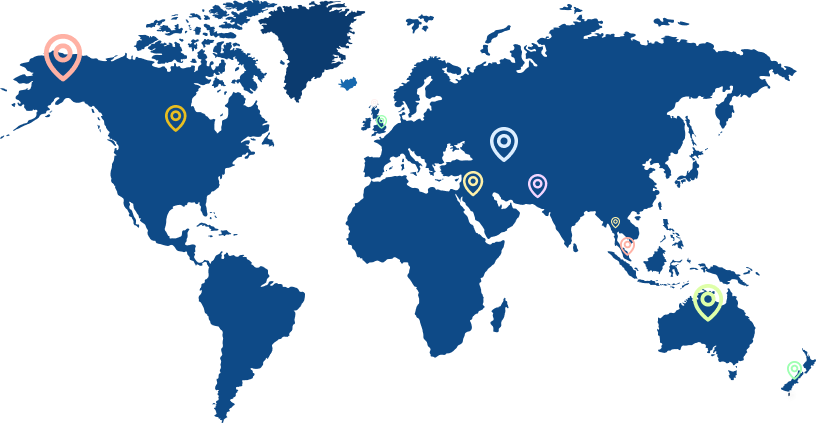
TutorBin believes that distance should never be a barrier to learning. Over 500000+ orders and 100000+ happy customers explain TutorBin has become the name that keeps learning fun in the UK, USA, Canada, Australia, Singapore, and UAE.